Tag: blogging

  • 3 things that make it hard to tell your story

    It is my business to help entrepreneurs and small businesses tell their stories. Telling your story with great, compelling, consistent content builds trust among your audience, and helps them know that you have a solution to the problems they face every day. Most entrepreneurs don’t think they can tell their story, and they also don’t think they have enough great content. Both are incorrect; however, there are several things that make it difficult for anyone, let alone an entrepreneur in the thick of building a business, to tell their story on a regular and consistent basis.

    Here are three things that can make it really tough to create great content on your own behalf in a way that is compelling and credible to your audience.

    • You’re too close to the product. You invented this thing, this solution to a market problem. You know it inside, out, and backwards. You can explain every feature, function, and bug. You know where it’ll be in 2 months and 2 years. But your customer can’t see any of that, and, for now anyway, doesn’t care. They want their problem solved right now, and you are not able to see the flaws that your customer sees instantly. It’s not a hit against the entrepreneur to be “too close to the product.” That’s your job! But it may mean that you can’t tell the story, explain the problem, or empathize with the customer objectively.
    • You are not your user. Just because it looks right to you and sounds right to you and seems right to you doesn’t mean that your user will like it, know how to use it, understand it, or even care. How can you share what you’re dreaming of from your perspective, when you really should be looking at the solution from your user’s perspective? It’s interesting to see how often an entrepreneur will fall in love with their own product. “I love this app!” they’ll say. But the app is not for you. It’s for your user. Do they love it? They might, but they might not, and the reasons they love it may be very different from your own.
    • You speak in your language, not the customer’s language. One of the funniest and most entertaining things in every small business and startup I’ve been in is the jargon, the language, the acronyms. At the telecom startup that was acquired by First Data, we once named a module “Ope”, which was really an acronym for “Order Processing Executive”, and yes, there was also an “Andy”, though I can’t remember what that stood for. Someone actually said these things in a meeting with a customer. After some very strange looks, we explained what it all meant. The customer got a good laugh, but couldn’t care less what we called our internal systems. They just wanted their information to get disseminated quickly and properly.
    While you really must tell your story, especially if you’re a startup or small business, it can be difficult, and these are some of the reasons why it can be hard. But that’s ok, because “you” doesn’t always have to be “you” personally. Your organization needs to create great content that tells your story as it unfolds and brings customers closer, and you can outsource that process or dedicate an internal resource to it.
    The vision should still come from the one who holds the vision, but the words do not have to be typed by you personally.
  • Why to Tell Your Story

    I’ve written recently about telling your story and how to keep telling your story ad how some stories write themselves, but haven’t really delved into some deeper reasons to tell your story, so here’s the “why” of telling your story, both your personal story and the story of your business.

    I spent the day today on the road with my family going to and from a funeral in Murfreesboro, TN. I have two teenagers, so part of the chatter on the way up was about why exactly we were driving 3 1/2 hours each way to go to the funeral of a lady we never met. It was an excellent teaching time, mainly to get through to a couple of teenagers that it’s not about them, but also that it was about our friend who’s mother passed away after 88 wonderful years of life.

    It was a wonderful home-going celebration of this lady’s life, and the theme that ran throughout all the words shared about this lady was “stories.” Sons, daughters, grandsons, granddaughters, and friends all spoke of the stories this lady would share about life, love, friends, family, history. Everyone who knew this lady knew everything about her life…

    Because she constantly told her story, both in writing and verbally.

    What’s this mean to you and me? Here’s 4 simple thoughts to answer that question, and I hope drive you a little closer to sharing your story.

    • All it takes is one generation who doesn’t know your story for your entire story to simply vanish forever. If you don’t regale your new employees with the genesis of your business, how will they ever know, understand, and live out the culture that you created?
    • How will they know how it all started? It’s said very often that you can’t know where you’re going until you know where you’ve been or where you came from. Or that you should always remember where you came from. But what if you don’t know where you came from? What if those who came before you never shared those stories? Who have you received advice from? I’ll bet you next month’s coffee bill that they gave you advice in the form of war stories from their own hard knocks.
    • Who else knows your story? Very few people know your own story as well as or better than you do, so who better to share your story than you? If you don’t share it, who will? We’re not talking NY Times bestselling autobiographies here, but rather simply how you got where you are today and why you chose that path, or that path chose you.
    • How do you entrench your team in the culture if you don’t tell them the stories behind each and every part of the culture and why that particular word or phrase is used? How will they know?

    You have to tell them. Everyone loves a story, and everyone has a story. Your story matters. Tell your story, or it might just vanish. That reason alone is a huge part of why we’ve engaged in telling the stories of the people who have walked the halls at Atlanta Mission. Their stories are rarely told, because many times their stories are not pretty and don’t always end in “happily ever after”, but those are the stories that make us understand how important our own stories are to the people right next to us.

    I’ll let you decide whether these points are more appropriate for your family tree or for your business, but it’s likely that the two are very intertwined.

  • How to Keep Telling Your Story

    Continuing with yesterday’s post, which gave five more reasons that every startup really needs to tell its story, it’s easy to understand how many startups simply don’t know where to start telling their stories. Many times I speak with entrepreneurs about blogging and they end up at a point at which they can’t see themselves having anything really good to blog about after they’ve covered the basics of their business. It’s a misnomer that once you’ve blogged on a topic, or created any content on that particular topic, you can’t focus on that topic again. It’s just not true. In fact, the opposite is the case.

    Ask any marketer how many times their target audience has to be shown the marketing message before they actually see it: at least 6, and more like 10. The same message has to be presented to your target audience 6 – 10 times before they ever realize what they’re seeing it. This is the same philosophy behind showing the same old commercials on TV over and over and over ad nauseam.

    Why should it be any different for your company’s blog? For many startups and most small businesses, the blog is the primary method of publishing the content of their marketing message. Here are three constructs that you can apply to your content calendar to make sure that you keep telling your story until your audience actually sees it.

    • Yesterday | Today | Tomorrow – This method is the simplest, and really is just what it says: what happened yesterday (or last week or month); what’s going on today (or this week or month); what’s planned for tomorrow (next week, month, or quarter). Literally, tell your audience what’s going on with your business. Have you hired anyone? Made any changes to your product or website? Gained any new partnerships? Created any new offerings? What’s coming in the future? What did you just launch or announce today?
    • Educate | Engage | Exchange – This model fits well into the types of content to offer up, assuming you have a lot of content as part of your business. “Educate” means to teach your audience something relevant to your business. Salesloft and Rivalry do a great job of teaching businesses different aspects of the B2B sales process. “Engage” is about engaging in a conversation on a more personal level by sharing your team, your culture, or your values. And “Exchange” means commerce, or a more direct marketing message, e.g., “Big Summer Blowout!”
    • Winter | Spring | Summer | Fall – This third construct is event and calendar driven, or may apply simply because your business is very seasonal, and you really do different things in each season. An example of this might be a restaurant with a seasonal menu or an outdoor patio or some other part of the restaurant that opens or closes depending on the season. 

    More than one of these constructs may apply to your business, and each requires a different level of planning using your content calendar. The idea is to make sure you never lack for content, types of content, and meaningful engagement with your audiences and customer segments.

    Which one of these content constructs might help you in telling your story?

  • Tell Your Story

    There are not many days that I don’t have the conversation with an entrepreneur or small business owner about “telling your story”. It’s incredibly important these days to maintain a constant flow of communications out from your HQ to your target audience. Here are 5 reasons that your outflow of story telling must stay constant and consistent.

    1. There is so much competition these days because it’s so easy to create a startup with a web site – a good looking web site – that it’s easy to be overrun in a space that you’ve owned, just because it looks like you’re asleep at the wheel and the new kid on the block is kicking it.
    2. The 24 hour news/social cycle enables someone who’s never heard of you yesterday to be your most adamant fan today, just because you connected with them and showed the right empathy for their pain.
    3. Your story is constantly changing because your are, after all, a startup, and that’s the job of a startup: do dozens of experiments until you find the right solution for the biggest problem with the most customers willing to pay.
    4. Your market is always growing, so there are always new customers who haven’t heard of you yet, and the most popular way consumers make decisions these days is by consuming real information from blogs and peers that they trust.
    5. Your audience is always looking for the solution to their problem. They just haven’t found you yet. Thirty years ago, would you have opened a little office and put out a shingle and then hid inside the office? No, of course not. You’d have set out to meet every potential customer in town so you could – wait for it – tell them your story.

    Now you have the internet. No more telling your story to one person at a time. Sangram Vajre, the CMO of Account Based Marketing startup Terminus, just published a post that somewhat transparently says “here’s the tools we use to market ourselves.” At the bottom of his mar-tech stack, the building blocks on which everything else relies, is, you guessed it, their blog. That’s how they tell their story. Check it out here.

    Those are just a few reasons that your startup needs to constantly tell its story. It just so happens that the easiest way to tell your story is in a daily, weekly, or bi-weekly blog. Tomorrow I’ll review a couple of constructs that can make it much easier to keep the stories flowing.

  • Experienced Entrepreneurs Should Blog More

    Earlier today, Allen Nance tweeted his “new strategy” for engaging in social media:

    I replied to Allen, “you left out #blog: where you teach others.” Around the end of the day, I had a conversation with KP Reddy about his latest torrent of blog posts, which are pure no-BS, entrepreneurial gold.

    Turns out, KP and Charlie Paparelli have a little unspoken gamesmanship going on. KP had urged Charlie to begin regularly sharing his experiential wisdom, lessons, advice, and general “been there, done that” talks on paparelli.com. Charlie has done just that, and I, for one, cannot get enough of it. It’s real. It’s Charlie’s story, not just about startup-land and happy happy joy joy, but his battle with alcohol, successes, failures, and struggles.

    What if you could regularly soak up all the stuff they’ve seen, done, experienced, and been through…all the challenges they’ve faced, all the mountains they’ve climbed, all the obstacles they’ve overcome, and all the lessons they’ve learned through their journeys?

    You can. We can. It just takes a little encouragement. KP urged Charlie to blog. Charlie did, and then elbowed KP with a kind nudge that he should do the same. And, voila! You have two of Atlanta’s most successful, experienced, respected, and connected entrepreneurs sharing their wisdom. That’s how we learn. First by being willing to learn from others, and second by actively seeking out their wisdom.

    So, if you get a chance, thank Charlie and KP for sharing their wisdom, and ping Allen (and maybe Paul Judge, too!) and remind them that they have TONS to share and teach the Atlanta entrepreneurial community.

    Who else do you know who has untold sums of entrepreneurial and life wisdom? Encourage and challenge them to share that wisdom. It’s cathartic for them, and pure gold for the rest of us. 

    And to those who do regularly share their wisdom, thank you for doing so.

  • More Speaking & Teaching In May

    We had so much fun last Saturday offering the Digital Marketing Bootcamp at General Assembly that we’re going to do it again in June! It really was a great class, thanks to the 14 future digital marketers who attended and shared their visions for what they want to do in digital. We’ll be offering that same Saturday class again on Saturday June 20 from 10-4pm.

    But before we get to that, here’s what’s coming up in the next two weeks:

    • Advanced Social Media Strategy – Wednesday May 13th from 1-4pm – Social media marketing is an extension of content marketing. In this half day class, we’ll walk you through practical best practices for each social marketing channel, what not to do on each channel, and how to really engage your customers using simple techniques that anyone can practice on a daily basis.
    • Blogging Bootcamp – Need to blog? Silly question. Everyone needs to blog, especially startups and small businesses. But not everyone has a WordPress developer at their disposal. The good news is, you don’t need one. In this Saturday bootcamp, you’ll start with nothing, and leave with your own domain, a fully functioning WordPress blog with all the necessary plugins, a content strategy just for you, and your first three blog posts ready to go.
    • FailCon – You read that right: FAIL con. A conference about failure, because we all fail, have failed, are failing, or will fail at something. If you’re not failing, you’re not growing. I’ve failed a lot, so this one’s going to be just a little more personal than a bootcamp. If you’re up for some heartbreak, some joy, and some fun, please attend FailCon Atlanta on May 21st.
    I hope to see you at one or more of these events. They’re all going to be lots of fun. Thanks to GA for hosting all these great events.
  • Buffer, Kabbage, and Suster agree: blog.

    I preach every day that every company should blog, especially startups and small businesses with limited marketing budgets. Pushing your content out via your blog is the starting point for your entire digital marketing strategy, which encompasses your content marketing strategy. Blogging requires only your time, and your organized thoughts put to keystrokes that tell your company’s story as it unfolds.

    But don’t listen to me. I’m just a lowly blogger who preaches and teaches this stuff. Listen to the people you’re already listening to, or you should be listening to them anyway.

    Buffer, a leader in social media marketing tools, had this to say about their social media presence:

    Our blog content is a key component to our social media strategy. Ninety percent of our social media updates are based on content we’ve written on the blog.

    Ninety percent of all of Buffer’s social media updates come from their blog. Like I said above, the content of your blog is the lifeblood of your digital & social strategy. If you don’t have a blog, then what are you posting to your social media channels? Yes, there is a whole internet full of stuff that’s relevant to your business that you can share, but it’s not yours. Do you want people to trust you for original thought in your area of expertise? Then you have to create content.

    Side note: what’s in that other 10%? Personally, I think it’s the freedom, mindset, and brand to pay attention to the world around them and make ultra wins like Arby’s and Oreo have done simply because they can.

    Still not convinced? OK, let’s bring it a little closer to home in Atlanta with Kabbage, a rapidly growing small business loan source. In a blog post earlier this month titled, “5 Steps to Outpace Your Competition in Google Search on a Shoestring Budget,” the author of the post put it more simply than I ever could:

    First and foremost, you should have a blog on your site where you create compelling content.

    Couldn’t agree more. Kabbage has been very successful, and they have a very strong content marketing team and plan. Another Atlanta startup has taken a turn towards very aggressive content marketing by teaching their audience how to use their product, from beginning to end. Codeguard’s latest series of blog posts is driven by video content on how to use their product.

    Finally, from your startup turned VC hero Mark Suster, you get a one word response to the question, “should you actually write [a blog] if you’re a startup?

    “Absofuckinglutely.”

    Any questions? Survey says you need to blog for your startup.

  • Got Presentations? Create Blog Content.

    The average American reads approximately 300 words per minute. The average time that a speaker talks per slide of a presentation (one with slides, of course) is at least 30 seconds, and, depending upon the complexity of the content, up to three minutes per slide.  For the purpose of this blog post, let’s assume it’s 2 minutes per slide, so for a 30 minute presentation you would use approximately 15 slides.

    Now let’s do the math. If you talk for 2 minutes per slide, that’s approximately 300 words x 2 minutes, or 600 words, which is longer than the optimal length of a short, SEO friendly blog post. The image at the top of this post is a good example.

    The image is one slide out of 45 slides that I used to deliver a 3-hour seminar on “Advanced Social Media Strategy” at General Assembly last week. (Shameless plug: the class is offered again Wednesday, May 13 from 1 – 4pm). From this one slide, highlighting best practices for using YouTube videos to market your business, I was able to create a 622 word blog post, which is a 2-3 minute read.

    Unfortunately, I can’t make a blog post from every single slide in that presentation, since some are topic introductions, session dividers, examples, etc.; however, if I can use even half of those 45 slides, that’s a series of 20+ posts on one subject, each post a short, easily-digestible chunk of usable information.

    This technique is what’s commonly known as re-purposing your content. I spent about 3 hours creating the slide presentation, and about 20 minutes creating this first blog post, which can be shared over and over and over, not to mention I’ll be teaching this session again.

    If you or someone at your business presents slide presentations regularly, you already have TONS of content, and that doesn’t even include video of the presenter in action!

    How much content do you have? More than you thought.

  • The Interview

    When I’m not creating content (aka writing), I’m getting content from those who know it best: entrepreneurs. That’s the heart of the routine as your content creator & strategist. I ask you an open ended question, you tell me your entire story, which then becomes blog fodder for your content marketing calendar.

    If only it were that simple. That’s what it looks like from 100,000 feet, but down here on good ole terra firma, it’s a little different.

    1. Introduction (email, phone, LinkedIn, Twitter)
    2. “Who are you again? Oh, ok.”
    3. Set the playing field: content is king and you must blog.
    4. Arrange the first session.
    5. Reschedule first session due to conflicts.
    6. First session. Light bulbs go on.
    7. Create one-page strategy doc.
      • Content buckets
      • Voice, Message, and Mix (60-20-20 rule)
      • Schedule / Frequency
    8. Set interview schedule.
    9. Interview.
    10. Blog.
    11. Repeat steps 1 – 11 until success
    So, like most professions, there’s a lot of other stuff that has to get done and surrounds the best part of the entire process: interviewing and blogging. Or, said another way, learning your story and telling your story. That is the joy of this business. That’s what doesn’t feel like work. The interview is by far the most fun, because I’m learning something brand new. I may have an insight or two from a business or experience angle, but nobody knows your stuff better than you.
    The interview. It’s kinda like going back to school every day to learn something completely new.
  • Two TED Talks That Tempered My Tongue

    When I started Pitch Practice in June of 2013, I didn’t know what it would eventually be or what value it might have to others. It was simply a fun gathering of fellow entrepreneurs to help each other answer the question, “So, what do you do?” a little better, and also help us prepare for events like Atlanta Startup Village and Startup Riot. The weekly event certainly has accomplished all those reachable goals.

    However, it wasn’t until running the meeting for a more than eighteen months that I found two TED talks that completely changed the way I lead Pitch Practice, and the way I help startup entrepreneurs (a) develop their elevator pitch and (b) tell their story.

    In developing a 30 second elevator pitch, I developed the following formula, and have used it in every pitch talk since.


    1. Name
    2. Company name (if you have it yet)
    3. Problem you’re solving
    4. Solution
    5. Customer (who pays you money)
    6. Ask


    There’s no right or wrong order, and you don’t have to use all these elements if you don’t want to, but this is a place to start, a structure, a set of boundaries that will help you get from a blank piece of paper to a very short and eloquent elevator pitch that you can say to anyone and they’ll get it.


    “Problem” is in red because that’s where your focus should be in starting a tech business today. We get this structure from the Lean Startup Methodology, codified by Eric Ries and Steve Blank. The basic tenet is that you don’t come up with great ideas. Rather, you create solutions to really big expensive problems. So, if you’re not solving a painful market problem, you might want to re-evaluate your idea. That’s where your focus is in your 30-second pitch, because when you’re talking to your proper audience, they will all get it, and immediately want to know more about your solution.


    You’ve heard the adage, “You can lead a horse to water, but you can’t make him drink,” but I say that’s a myth and a hoax. You can make that horse (your audience) drink, if you put salt in their oats. The problem you’re solving is the salt. That gets us to the first TED talk (sorry it took so long), which is from 2009, in which Simon Sinek brilliantly explains that people don’t buy your “what” they buy your “why”. Sinek refers to Apple as one of the examples of how a brand can be so good at their “why” that it doesn’t matter what their “what” actually is. Why would you buy a music player or a phone or a watch from a computer company?


    Because you know it will break all the previously defined boundaries, just like the Macintosh did in 1984, the iPod did in 2001, the iPhone in 2007, the iPad in 2010, and perhaps the iWatch in 2015.


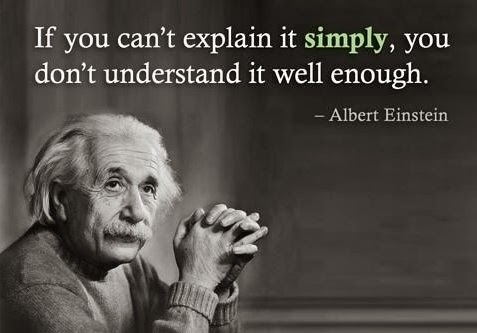
    In your pitch, the problem you are solving is your “why”, and is the focus of all your energy and words. When you can simplify a huge market problem into just a few words so that your 5 year old kid or your 85 year old grandmother understands it, then you truly understand it and can convey your vision for solving that problem to anyone. Too often, great ideas are presented by entrepreneurs who have no desire, preparation, or structure for telling their story, so the problem goes unsolved until a “visionary” who can focus on the “why” enters the market.


    The second TED talk involves actually telling your story in a pitch much longer than 30 seconds, and is a bit more complex, but incredibly powerful when utilized properly. Part of Apple’s amazing success is the ability of its founder, Steve Jobs, to keep his audience on pins and needles. Nancy Duarte took a deep look at the speech Jobs gave in introducing the iPhone in 2007 and Martin Luther King, Jr.’s “I have a dream” speech. She dissected both speeches so thoroughly as to bring out a purposeful and powerful pattern that keeps the audience thoroughly engaged and on the edge of their seats.


    The pattern itself is simple: down and up and down and up and down. But what does that mean to the entrepreneur pitching his or her startup to any audience? It really is simple, and yet so powerful:


    • Down: The market space today has a problem
    • Up: I know how to solve that problem.
    • Down: The problem is costing us billions every year.
    • Up: The problem can be solved.
    • Down: There are many obstacles to this solution.
    • Up: We have a plan to change the market!
    • Down: The competition is fierce and well funded.
    • Up: Our team is the very best in the space.


    This simple pattern of carrying the audience to new highs and new lows one after the other has an amazing effect on the listeners, mainly by keeping them thoroughly engaged until the peak of the speech in which the solution is shared and the vision cast.


    I’ve listened to and offered suggestions for more than 700 pitches from all kinds of markets and entrepreneurs, but until I heard and applied Sinek and Duarte’s TED Talks to Pitch Practice, it was based on nothing but “that seems to work better”. Now I have wonderful inspiration for positively leading entrepreneurs to focus on the problem they are solving as their “why”, and to tell a story with a pattern.
    Having a structure to anything makes it so much simpler to begin, and having a structure to your pitch and your story can carry your startup a long way towards success.