Tag: content marketing

  • Content Marketing Takes a Turn for the Worse

    What are we saying with our content marketing?When content marketing was first hailed as an initiative for brands to reach customers, marketers and consumers alike couldn’t get enough of it.

    But in the past couple of years, content marketing has turned down a dark path.

    We’re now producing gobs of articles and podcasts and social posts that mostly repeat each other.

    They annoy rather than inform.

    Many of my marketing friends and colleagues have swallowed the koolaid that the more words they produce, the better their marketing will work.

    Our gurus – and there are plenty of them – urge us that “content is king” and “write attention-grabbing headlines” and other nonsense mantras that don’t hold water.

    More, more, more! scream the so-called experts.

    But what ever happened to quality over quantity?

    My past six years as a freelance and professional content producer – everything from newspaper articles to product descriptions to blog posts to email marketing and more – have ingrained in me the intrinsic value of thought-provoking, well-researched content.

    At one point, I was required to post daily blog updates! Of more than 600 words! With quality, well-researched information!

    That kind of content production is foolish, and doesn’t help anyone.

    In a world where attention spans are zero and inboxes are crowded, no one has time to ingest content coming at them so quickly.

    And when you aren’t zealous about bringing something new and eye-opening to the table, you lose your readers’ trust.

    You haven’t helped anyone, not even yourself.

    The sales teams I’ve had the pleasure of working with read and follow the direction of a book called Integrity Selling, the primary tenet of which is to be up front with the person you’re selling to at all times. If the product isn’t a good fit for their timing or budget, you tell them.

    I vote as marketers we bring the same kind of integrity back to our content. Take a deep breath and walk with me through what that might look like.

    Imagine producing one piece of content a month you’ve had weeks to research and prepare. You’ve interviewed three different people for their perspectives. A designer has mocked up images that complement your thesis perfectly, translating those images to stunning social posts.

    When you hit publish on that content, you take the time to ask influencers to share it with their networks and you dedicate a week of time to promoting it in your email marketing, on your website, and on your other channels.

    This is the basic process I follow as marketing manager at Orderly. My measurement of success is that I never publish anything I am not 100 percent proud of or that I know without a doubt will help my audience in the independent restaurant industry.

    When I take the time to make sure others in the industry know about the helpful info I’ve put out there, it’s invigorating when they get excited about it, too.

    Sure beats the drill of over-publishing under-appreciated content.

    This is what I tell the students at General Assembly who sit through my content marketing classes because this is the perspective I want the new generation – young or old – to have about producing content.

    As I’ve urged and encouraged them, so I do the same to you: Stop shooting yourself in the foot with over producing shoddy content.

    Instead, concentrate on what matters: research, SEO, depth, images, share-a-bility, influencers, and conversations.

    Remember, people don’t buy from content or websites or blogs. People buy from people.

    Bring the personality, sincerity, and empathy of a person back to your content marketing.

  • 3 things that make it hard to tell your story

    It is my business to help entrepreneurs and small businesses tell their stories. Telling your story with great, compelling, consistent content builds trust among your audience, and helps them know that you have a solution to the problems they face every day. Most entrepreneurs don’t think they can tell their story, and they also don’t think they have enough great content. Both are incorrect; however, there are several things that make it difficult for anyone, let alone an entrepreneur in the thick of building a business, to tell their story on a regular and consistent basis.

    Here are three things that can make it really tough to create great content on your own behalf in a way that is compelling and credible to your audience.

    • You’re too close to the product. You invented this thing, this solution to a market problem. You know it inside, out, and backwards. You can explain every feature, function, and bug. You know where it’ll be in 2 months and 2 years. But your customer can’t see any of that, and, for now anyway, doesn’t care. They want their problem solved right now, and you are not able to see the flaws that your customer sees instantly. It’s not a hit against the entrepreneur to be “too close to the product.” That’s your job! But it may mean that you can’t tell the story, explain the problem, or empathize with the customer objectively.
    • You are not your user. Just because it looks right to you and sounds right to you and seems right to you doesn’t mean that your user will like it, know how to use it, understand it, or even care. How can you share what you’re dreaming of from your perspective, when you really should be looking at the solution from your user’s perspective? It’s interesting to see how often an entrepreneur will fall in love with their own product. “I love this app!” they’ll say. But the app is not for you. It’s for your user. Do they love it? They might, but they might not, and the reasons they love it may be very different from your own.
    • You speak in your language, not the customer’s language. One of the funniest and most entertaining things in every small business and startup I’ve been in is the jargon, the language, the acronyms. At the telecom startup that was acquired by First Data, we once named a module “Ope”, which was really an acronym for “Order Processing Executive”, and yes, there was also an “Andy”, though I can’t remember what that stood for. Someone actually said these things in a meeting with a customer. After some very strange looks, we explained what it all meant. The customer got a good laugh, but couldn’t care less what we called our internal systems. They just wanted their information to get disseminated quickly and properly.
    While you really must tell your story, especially if you’re a startup or small business, it can be difficult, and these are some of the reasons why it can be hard. But that’s ok, because “you” doesn’t always have to be “you” personally. Your organization needs to create great content that tells your story as it unfolds and brings customers closer, and you can outsource that process or dedicate an internal resource to it.
    The vision should still come from the one who holds the vision, but the words do not have to be typed by you personally.
  • Why to Tell Your Story

    I’ve written recently about telling your story and how to keep telling your story ad how some stories write themselves, but haven’t really delved into some deeper reasons to tell your story, so here’s the “why” of telling your story, both your personal story and the story of your business.

    I spent the day today on the road with my family going to and from a funeral in Murfreesboro, TN. I have two teenagers, so part of the chatter on the way up was about why exactly we were driving 3 1/2 hours each way to go to the funeral of a lady we never met. It was an excellent teaching time, mainly to get through to a couple of teenagers that it’s not about them, but also that it was about our friend who’s mother passed away after 88 wonderful years of life.

    It was a wonderful home-going celebration of this lady’s life, and the theme that ran throughout all the words shared about this lady was “stories.” Sons, daughters, grandsons, granddaughters, and friends all spoke of the stories this lady would share about life, love, friends, family, history. Everyone who knew this lady knew everything about her life…

    Because she constantly told her story, both in writing and verbally.

    What’s this mean to you and me? Here’s 4 simple thoughts to answer that question, and I hope drive you a little closer to sharing your story.

    • All it takes is one generation who doesn’t know your story for your entire story to simply vanish forever. If you don’t regale your new employees with the genesis of your business, how will they ever know, understand, and live out the culture that you created?
    • How will they know how it all started? It’s said very often that you can’t know where you’re going until you know where you’ve been or where you came from. Or that you should always remember where you came from. But what if you don’t know where you came from? What if those who came before you never shared those stories? Who have you received advice from? I’ll bet you next month’s coffee bill that they gave you advice in the form of war stories from their own hard knocks.
    • Who else knows your story? Very few people know your own story as well as or better than you do, so who better to share your story than you? If you don’t share it, who will? We’re not talking NY Times bestselling autobiographies here, but rather simply how you got where you are today and why you chose that path, or that path chose you.
    • How do you entrench your team in the culture if you don’t tell them the stories behind each and every part of the culture and why that particular word or phrase is used? How will they know?

    You have to tell them. Everyone loves a story, and everyone has a story. Your story matters. Tell your story, or it might just vanish. That reason alone is a huge part of why we’ve engaged in telling the stories of the people who have walked the halls at Atlanta Mission. Their stories are rarely told, because many times their stories are not pretty and don’t always end in “happily ever after”, but those are the stories that make us understand how important our own stories are to the people right next to us.

    I’ll let you decide whether these points are more appropriate for your family tree or for your business, but it’s likely that the two are very intertwined.

  • The first step of social media marketing

    We had a fun class today at General Assembly for “Advanced Social Media Strategies,” and we’ll be holding this class again on Tuesday, June 30, from 1-4PM. One question that came up several times, because several of the attendees were in a similar position, was this:

    When you’re just getting started with a new business, and you know you’re going to be using social media, what’s the first thing you do? Where do you start?

    The context of this question is important, because if someone is starting from a blank slate, then the first place is with their core values and brand. But in today’s question, those pieces were already in place, so the marketers were interested in determining their first step with social media.

    The way I answered the question fits in well with the positioning of this particular class. The first step, assuming you have your core values and brand well buttoned up, is to create a content strategy. In other words, start with:

    • What kind of content will you produce? When you know your audience, you know what kinds of content will resonate with them. Produce this kind of content.
    • What channels will you use to publish and share? If you’re creating video, you used to just go straight to Youtube, but Facebook now has more daily uploads and views of video than Youtube. If your content is written, what blog platform will you use? 
    • How often will you publish & share it? There are best practices for how often you should share the same piece of content, whether it’s video, images, or text.
    • How will you define success? You have to set goals for social media. Too many times, people just jump on Twitter or Linkedin for their businesses or setup a Facebook page without any way to determine if their efforts are yielding any results at all.
    Then create some content, with a solid understanding of where and how your target audience consumes content. Once you have content, then you share it using best practices for social media.
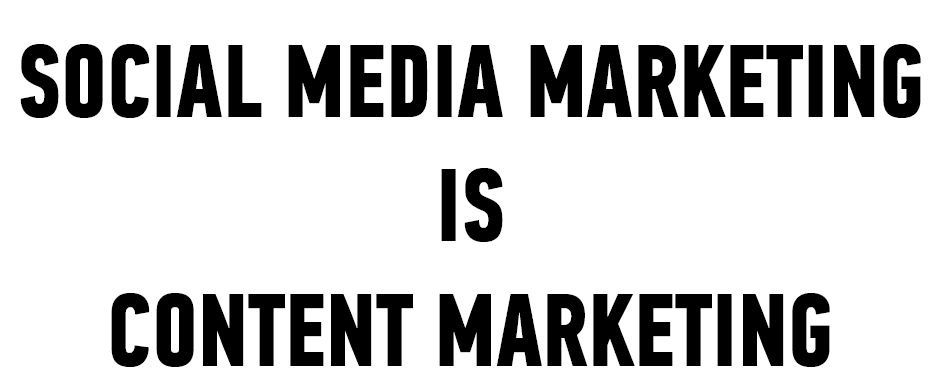
    We take this approach because social media marketing should be viewed as a subset of content marketing. Every word, image, video, graphic, photo, etc., is your content, whether you publish it on a blog or a long Instagram post. All your content should reflect your brand.

    Social media marketing is content marketing, and content marketing is an outgrowth and reflection of your brand in the form of educational, engaging, and exchange with your target audience.

  • How to Keep Telling Your Story

    Continuing with yesterday’s post, which gave five more reasons that every startup really needs to tell its story, it’s easy to understand how many startups simply don’t know where to start telling their stories. Many times I speak with entrepreneurs about blogging and they end up at a point at which they can’t see themselves having anything really good to blog about after they’ve covered the basics of their business. It’s a misnomer that once you’ve blogged on a topic, or created any content on that particular topic, you can’t focus on that topic again. It’s just not true. In fact, the opposite is the case.

    Ask any marketer how many times their target audience has to be shown the marketing message before they actually see it: at least 6, and more like 10. The same message has to be presented to your target audience 6 – 10 times before they ever realize what they’re seeing it. This is the same philosophy behind showing the same old commercials on TV over and over and over ad nauseam.

    Why should it be any different for your company’s blog? For many startups and most small businesses, the blog is the primary method of publishing the content of their marketing message. Here are three constructs that you can apply to your content calendar to make sure that you keep telling your story until your audience actually sees it.

    • Yesterday | Today | Tomorrow – This method is the simplest, and really is just what it says: what happened yesterday (or last week or month); what’s going on today (or this week or month); what’s planned for tomorrow (next week, month, or quarter). Literally, tell your audience what’s going on with your business. Have you hired anyone? Made any changes to your product or website? Gained any new partnerships? Created any new offerings? What’s coming in the future? What did you just launch or announce today?
    • Educate | Engage | Exchange – This model fits well into the types of content to offer up, assuming you have a lot of content as part of your business. “Educate” means to teach your audience something relevant to your business. Salesloft and Rivalry do a great job of teaching businesses different aspects of the B2B sales process. “Engage” is about engaging in a conversation on a more personal level by sharing your team, your culture, or your values. And “Exchange” means commerce, or a more direct marketing message, e.g., “Big Summer Blowout!”
    • Winter | Spring | Summer | Fall – This third construct is event and calendar driven, or may apply simply because your business is very seasonal, and you really do different things in each season. An example of this might be a restaurant with a seasonal menu or an outdoor patio or some other part of the restaurant that opens or closes depending on the season. 

    More than one of these constructs may apply to your business, and each requires a different level of planning using your content calendar. The idea is to make sure you never lack for content, types of content, and meaningful engagement with your audiences and customer segments.

    Which one of these content constructs might help you in telling your story?

  • Tell Your Story

    There are not many days that I don’t have the conversation with an entrepreneur or small business owner about “telling your story”. It’s incredibly important these days to maintain a constant flow of communications out from your HQ to your target audience. Here are 5 reasons that your outflow of story telling must stay constant and consistent.

    1. There is so much competition these days because it’s so easy to create a startup with a web site – a good looking web site – that it’s easy to be overrun in a space that you’ve owned, just because it looks like you’re asleep at the wheel and the new kid on the block is kicking it.
    2. The 24 hour news/social cycle enables someone who’s never heard of you yesterday to be your most adamant fan today, just because you connected with them and showed the right empathy for their pain.
    3. Your story is constantly changing because your are, after all, a startup, and that’s the job of a startup: do dozens of experiments until you find the right solution for the biggest problem with the most customers willing to pay.
    4. Your market is always growing, so there are always new customers who haven’t heard of you yet, and the most popular way consumers make decisions these days is by consuming real information from blogs and peers that they trust.
    5. Your audience is always looking for the solution to their problem. They just haven’t found you yet. Thirty years ago, would you have opened a little office and put out a shingle and then hid inside the office? No, of course not. You’d have set out to meet every potential customer in town so you could – wait for it – tell them your story.

    Now you have the internet. No more telling your story to one person at a time. Sangram Vajre, the CMO of Account Based Marketing startup Terminus, just published a post that somewhat transparently says “here’s the tools we use to market ourselves.” At the bottom of his mar-tech stack, the building blocks on which everything else relies, is, you guessed it, their blog. That’s how they tell their story. Check it out here.

    Those are just a few reasons that your startup needs to constantly tell its story. It just so happens that the easiest way to tell your story is in a daily, weekly, or bi-weekly blog. Tomorrow I’ll review a couple of constructs that can make it much easier to keep the stories flowing.

  • Nobody cares how much you know

    Two times with two different entrepreneurs today, we had to do a complete 180 as we evaluated their messages to their prospects. In both cases, the main part of the messaging was focused on what the startup does. “We provide this or that to these people for this price, etc.” But in both cases, delivering that message did not have the intended effect.

    In reworking the initial message for both of these entrepreneurs, I reminded them that they should start out by making sure their audience understands what’s broken. In other words, what’s the problem, and why should my audience care? How does this problem affect them?

    One of the entrepreneurs needed help understanding why you would begin a marketing message with a negative, with a problem. So I posed the following question to him. Which statement gets your attention, and makes you want to know more: a statement about how great your startup is, or a statement or question about a specific pain in your audience’s daily life?

    That’s when he got it. It made sense not to talk about “here’s what we do”, but rather about “you know how much of a pain it is for you to do this?!?”

    When you know your audience, and you have a deep understanding of the part of their daily life that’s broken, you have the ability to make that problem personal, to bring it home in language they can understand very easily. Then you have their attention to deliver your service message: “We solve that problem by doing this, that, and these so you don’t have to. Sign up to learn more.”

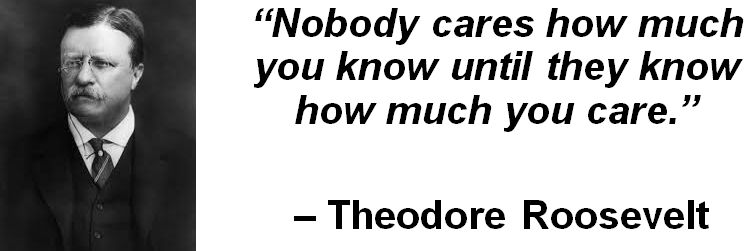
    Just like the Teddy Roosevelt quotation above, your audience couldn’t care less what you do until they know that you understand their problem, and can solve it. When creating your marketing message, remember to lead with the problem.

  • Experienced Entrepreneurs Should Blog More

    Earlier today, Allen Nance tweeted his “new strategy” for engaging in social media:

    I replied to Allen, “you left out #blog: where you teach others.” Around the end of the day, I had a conversation with KP Reddy about his latest torrent of blog posts, which are pure no-BS, entrepreneurial gold.

    Turns out, KP and Charlie Paparelli have a little unspoken gamesmanship going on. KP had urged Charlie to begin regularly sharing his experiential wisdom, lessons, advice, and general “been there, done that” talks on paparelli.com. Charlie has done just that, and I, for one, cannot get enough of it. It’s real. It’s Charlie’s story, not just about startup-land and happy happy joy joy, but his battle with alcohol, successes, failures, and struggles.

    What if you could regularly soak up all the stuff they’ve seen, done, experienced, and been through…all the challenges they’ve faced, all the mountains they’ve climbed, all the obstacles they’ve overcome, and all the lessons they’ve learned through their journeys?

    You can. We can. It just takes a little encouragement. KP urged Charlie to blog. Charlie did, and then elbowed KP with a kind nudge that he should do the same. And, voila! You have two of Atlanta’s most successful, experienced, respected, and connected entrepreneurs sharing their wisdom. That’s how we learn. First by being willing to learn from others, and second by actively seeking out their wisdom.

    So, if you get a chance, thank Charlie and KP for sharing their wisdom, and ping Allen (and maybe Paul Judge, too!) and remind them that they have TONS to share and teach the Atlanta entrepreneurial community.

    Who else do you know who has untold sums of entrepreneurial and life wisdom? Encourage and challenge them to share that wisdom. It’s cathartic for them, and pure gold for the rest of us. 

    And to those who do regularly share their wisdom, thank you for doing so.

  • What the Twitter + Google partnership means to the digital marketer

    Earlier today, my friend and fellow marketer Kevin Ekmark shared this story on Twitter about the renewal of the Twitter-Google partnership. From 2009-2011, Google had access to the Twitter “firehose” of data, but for reasons most of us won’t ever know, that partnership stopped. Then rumors of a rebuilding came about late last year. Now it’s confirmed that “Tweets are now going straight into Google.” What does this statement mean? It means that…

    • all your tweets are indexed in Google’s search engine results in (near) real time; no Google bots that take any time to search and index this content.
    • you can search on any hashtag in Google and see the twitter results
    • all your twitter content is now part of your SEO (or as CopyBlogger says, “OC/DC”) strategy
    • when you search on Google, you can directly access Twitter results, even when you’re not logged into Twitter

    In case you’re wondering, this relationship is a really big deal. Comparing this setup to Facebook’s pretty much closed environment, it means that tweets are now web searchable content. For users and marketers, that means they are much easier to discover on the web. For Twitter, it means that non-twitter users can, and probably will, be exposed to all the content on Twitter and possibly be drawn in to start using the service.

    I’m all for this type of relationship, and there are huge benefits to Twitter, Google, Twitter users, and especially for social and digital marketers. Twitter is now expressly a part of your content marketing strategy and tactics. This subject was a lengthy discussion in our recent Digital Marketing class at GA Atlanta. I have been preaching that social media marketing is content marketing. Yes, there are many one-to-one interactions on Twitter between a brand and its audience, but in every case, the brand’s user representatives should be, must be, and are representing that brand by producing and publishing content, now more than ever, since every brand-customer interaction will be fully searchable on Google.

    And when a brand creates, schedules, and executes a twitter strategy, that is absolutely content marketing. Those who have been doing this already have an advantage over those who consider social networks to be only “social”, and not content marketing.

    Social content is content, and must be an intentional reflection of the values of the brand.

  • Take a Marketing Inventory

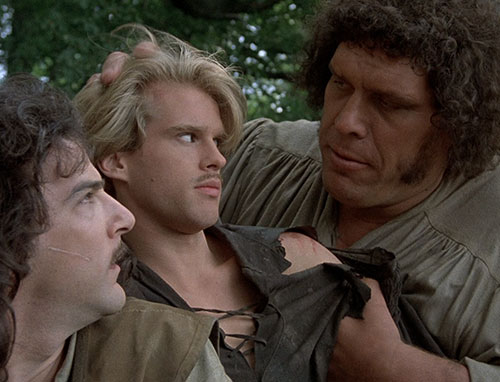
    General Assembly published my latest article on their blog today, How to Measure Social Media ROI. That post came from a seminar that we’re now teaching regularly at GA Atlanta, and is a great example of repurposing content from one media to many others. It’s not included in the blog post, but in the class, one of the thought provoking exercises is to take a marketing inventory. It reminds me of the scene in “The Princess Bride” after Inigo and Fezzik have rescued Westley from the pit of despair, fed him Miracle Max’s miracle pill, and Westley wakes up: “What are our assets?”

    Before you begin your content marketing strategy, leading to measuring your social media ROI, take an inventory of the following items.

    • CONTENT: what content do you already have or can you create on a regular, repeatable basis?
    • CHANNELS: what social media or other marketing channels (like email) are already established or would be an obvious good fit?
    • GOALS: do you have marketing or more specific social media goals in place? Some of you are shaking your heads right now, but you’d be shocked at how many business operate with no goals.
    • TRACKING: are there any tracking mechanisms in place, such as UTM parameters in your call to action URLs?
    • MEASURING: what analytics tools are you already using or could you use tomorrow, like Google Analytics, Twitter Analytics, Facebook Insights, etc.?
    • VALUE: have you established a value for each lead, each social media engagement? How much would it be worth if someone retweeted your best piece of content?
    • REVENUE: what is your average sale amount? lifetime value of your customer? average conversion rate? Do you know any of these metrics?
    • COSTS: what are your hard costs (personnel, software, etc.), soft costs, time costs, and sunk costs?

    It’s not a contest to see how many of these you can answer perfectly. Rather, it’s an inventory of what you have, so you can make an intelligent decision on how to proceed. For example, if you have an opt-in email list with 10,000 email addresses, that’s a major asset, even if you have zero presence on social media.

    It’s always good to know your assets and your liabilities, even if you don’t have a holocaust cloak or a wheelbarrow.