Author: Kevin Sandlin

  • Are you “engaged” at your job?

    Are you “engaged” at your job?

    Are you “engaged” in your work? The 2025 study by ADP Research that I reference in my TEDx talk concludes that 81% of all adult employees worldwide are “not fully engaged” at work, which means these employees are “not giving it their all.”

    So are you fully engaged at work? You know the saying…”if you have to ask…” Here are 4 ways to know whether or not you are engaged at work. 

    If you are engaged at your work…

    • You know and agree with your organization’s goals and objectives.
    • You actually want your organization to succeed, not just financially, but in its mission, which you also believe in.
    • You talk positively about your job to friends and family.
    • You see your future self in a much higher responsibility role at your current organization.

    First, answer honestly, then let’s dig into each one of these points. Where’d you land? This is my personal opinion, but if you asked yourself whether or not these 4 things are true about you and got 2/4, I’d put you higher than “not engaged”. Also, I think time on the job at the company has a profound impact on each of these points.

    Your organization’s goals and objectives – do you even know them? Sometimes this one is like knowing your high school’s alma mater, your song. That said, for any new employees, it’s the organization’s – the LEADERS’ – responsibility to make sure all new employees are “onboarded”. That’s usually just a big word for “here’s how to do your job”, but if your organization cares at all about creating a great culture, it’s much more. The organization’s goals and objectives and mission should be the most important thing you learn on (or before!) day one of your job.

    What does “success” look like for your organization? Your manager or leadership should have already clarified for you individually what success looks and feels like, but what’s that answer for the entire organization? What would your life – and the organization – look like if BOOM! you achieve your mission? Do you like that version of the world? 

    You talk positively about your job to friends and family. The easiest one to actually measure. Your words matter. How do you talk about your job, your workplace, your coworkers, your organization’s leadership? Truth in, truth out. Garbage in, garbage out. Any organization’s culture can be captured in a given employee’s words. What are yours?

    Where do you see your future self? Also easy to measure. Either you have a vision of yourself in a higher role, or you don’t. Don’t make it more difficult than it is. Where do you see yourself in 3, 5, 10 years? If it isn’t “here”, then you kinda know where your head is.

    As you walk through these points, you can pretty easily see why ADP Research found what it found. Where are you? Why? It’s a healthy exercise to walk through criteria like these as part of a bit of introspection. It’s kinda like doing a “year in review” or in military terms, an AAR (After Action Report), to understand what went (or is going) well, what needs fixing, and what the next year (or other period) should look like.

    So, are you engaged at your job? Do you want to be?
  • What’s Your Ted Lasso Talent?

    What’s Your Ted Lasso Talent?

    Ever drive home and realize you have no memory whatsoever about driving home? You’re on auto-pilot, completely lost in your thoughts, yet successfully navigating your car in Atlanta (or wherever) traffic?

    Yeah, me too. Happened just the other day.

    When I got home, I went out into the yard to do some much needed yard work, and got distracted watching my dog wander the yard. Briscoe, my 8 year-old rescue yellow lab, is blind. Yet he navigates the yard with ease. He makes his way around all his spots, fences, trees, bushes, and eventually arrives at the back door, where he barks and demands to be let back in.

    Unless his two girlfriends from next door, Poppy and Eloise, are here to play. Then he barks at them. He really wants to play with them, but they’re running all around him, and he can’t see them so he just barks in a “get off my lawn!” kinda tone.

    And sometimes I forget he’s blind. He wasn’t always blind, but has been progressing since a few months after we got him in 2019. Uveitis. No cure. But he manages, as long as we don’t rearrange the furniture.

    All that reminded me of each of our gifts. We all have God-given talents, gifts, things we just do without thinking about how to do them. We didn’t have to study or learn these things; they just came naturally to us.

    My daughter organizes and cleans. Her new husband fixes things. My brother in law makes and restores stuff. All self taught. I know several people who sell without thinking about it or knowing it. Like Ted Lasso encourages and builds up everyone he meets.

    They don’t have to think about it. They just do it. They’re not consulting “How To” books or YouTube. They have God-given gifts for doing those things.

    Just like God gave Briscoe great ears and a good sniffer so he can compensate for not being able to see, God gives us all certain specific gifts that we must use in doing the work God has created for us to do.

    What do you do that you don’t ever have to think about doing? No, not talking about not remembering your drive home. I’m talking about something you do everyday.

    How are you using that gift?

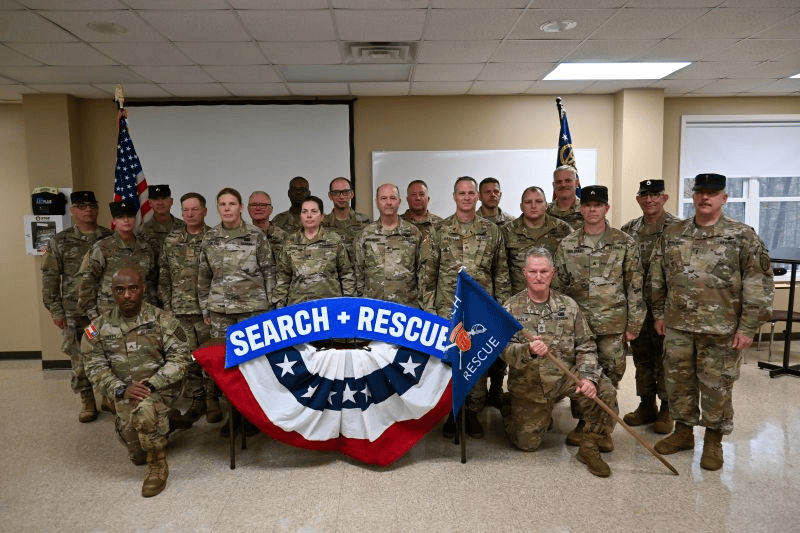
  • Search + Rescue Graduation

    Search + Rescue Graduation

    From November through April, these state guard soldiers endured freezing cold temperatures, inclement weather, and the grueling topography of the north Georgia mountains around Dahlonega to earn what we commonly call “The SAR Tab”.

    It starts with the understanding that “Search is an emergency!” Everything that follows that mindset is part of the training to be Search+Rescue certified:

    * Land naviation
    * Wilderness survival
    * First Aid / CPR
    * Lost person behavior
    * Low angle extraction
    * Knots
    * Rappelling
    * Teamwork
    * Leadership
    * Roles of a search team
    * Tracking
    * Low light search + rescue
    * Patient transport
    * Wilderness communication

    And much, much more. Relationships are forged, leaders are trained up, and each soldier becomes comfortable being very uncomfortable, whether out in the woods after dark in the winter, or weathering pouring rain in Georgia’s unbearable humidity.

    Search + Rescue is the pinnacle of the training offered to all Georgia state guard soldiers. One weekend each month for six months, with study and prep time in between, is the price to pay for top tier training. These soldiers answered the call to help their community and fellow Georgians when the need arises.

    Bring ’em home.

  • Consistency is King

    Consistency is King

    I used to say often, “Content is King.” Now I believe consistency is more important. Just like physical exercise: doesn’t matter how much you do, just show up and don’t put up a “0”. Do it.

    Last Tuesday, our weekly Bible study group completed our “season” of Bible study. Our season is generally the school year, and we take summers off, getting together once or twice over the summer just to catch up before we begin meeting again after Labor Day.

    Last Tuesday, we completed our 22nd year of weekly Bible study.

    We concluded this year with Proverbs 4:23

    Above all else, guard your heart,
    for everything you do flows from it.

    This morning, I did a search to find “Bible verses about consistency”, and Google, of all sources, pointed me to Proverbs 4:23, saying, “This verse emphasizes the importance of maintaining a consistent and guarded heart, as it shapes one’s actions and decisions.

    I didn’t want to lead a Bible study when we began back in 2003. We had just moved back to Atlanta from Colorado, and I called our small group leader from before we moved in 2000. I said, “We’d like to rejoin the small group.”

    He said, “No.”

    I knew he wasn’t being mean, because I knew him and his character, which was always, always very straightforward but just as nice as can be.

    He continued, “No, you’re not going to join us again. You’re gonna start and lead your own small group Bible study.”

    A couple of weeks later, we did just that. And while only one other person remains from that original small group, we’ve met consistently every Tuesday for 22 years.

    We’ve studied Genesis, Hosea, Jude, John, Malachi, Ephesians, Galatians, Colossians, Joshua, Judges, Ruth, 1 Samuel, 2 Samuel, Nehemiah, Esther, Proverbs, Joel, Amos, Jonah, Malachi, Romans, 1 Corinthians, 2 Corinthians, Philippians, 1 John.

    We’ve prayed and cried and laughed through marriage, divorce, death, birth, adoption, cancer, surgery, unemployment, failure, success, and everything else life has thrown at us.

    There were Tuesday afternoons when I didn’t want to l do it. But I always prepared and showed up. We even had a few Tuesdays early on when almost nobody could make it (life happens), and we made a rule: “It’s Tuesday, so we’re having Bible study, whether 2 or 20 show up.” That provided a great deal of clarity.

    There were summers when I considered stopping. “It’s been a good run”, I said to myself. I’ve talked with our small group pastor on numerous occasions, asking “How do you know when it’s time to quit?”

    Just like anything else in this life of being a Jesus follower, you’ll know, because God will make it abundantly clear.

    The one thing God has made abundantly clear to me is that He is in control of this small group, and I am His steward. He has called me to show up every Tuesday, tired or uninspired, and He will do the work.

    Just like Jonah, after he ran literally the opposite direction that God told him to go, showed up and said the words, “Forty more days and Nineveh will be overthrown.” All Jonah did was show up, and quite begrudgingly at that!

    God did the rest. Amen.

  • Do Hard Things: Why?

    Do Hard Things: Why?

    “Do hard things.”

    I hear that a lot lately. Actually, that message has probably been pointed at me all my life, but I only started hearing it “lately”.

    My first instinct upon hearing those 3 words was, “why?”

    What’s your first gut reaction?

    Because my first question is “why?”, I pursued that question, and I have learned the answer. You probably already know it. You probably knew it at a relatively young age.

    I didn’t. I had to learn it.

    Here are some “hard things” I’ve done, in no particular order.
    ✅ Became a Private in Georgia’s state guard at 50.
    ✅ Started a business with someone I didn’t know doing something I knew nothing about before I knew anything about starting a business.
    ✅ Shut down a business because it ran out of cash.
    ✅ Shut down another business because it became economically unsustainable.
    ✅ Did 21 (and counting) Peachtree Road Races.
    ✅ Completed GSDF Search + Rescue training course.
    ✅ Completed “Northern Tier” High Adventure with 12 teenage boys.
    ✅ Rescued and adopted 13 animals.
    ✅ Laid to rest 9 adopted rescue animals.
    ✅ Walked my daughter down the aisle (hardest).

    Anyone can do easy things. In fact, for most of my life, I typically chose the shortest distance between 2 points. Why would I choose to do hard things?!?

    Well, honestly, sometimes we don’t choose to do them. We face them knowing we have to do them. And I will argue that people won’t do certain things until they have to. That starts with growing up.

    ▶️ We won’t move out until we have to.
    ▶️ We won’t pay our own way until we have to.
    ▶️ We won’t get a real job until we have to.
    ▶️ We won’t take responsibility until we have to.
    ▶️ We won’t admit our mistakes until we have to.
    ▶️ We won’t change life habits until we have to.
    ▶️ We won’t learn new skills until we have to.
    ▶️ We won’t do hard things until we have to.

    And when we have to, we will. And then we choose to. Why?

    Here’s why.

    After you do the “hard thing(s)”, you realize that you *can* do them. You have confidence, if not swagger. And the next hard thing you face doesn’t really bother you as much. You’ve done worse. That doesn’t mean we don’t dread it or even fear it. But we know we can do it.

    Yeah, it’s a hard thing, but you’ve done harder things, except walking your daughter down the aisle.

    But even that, you know you can handle, because you’ve had to do really hard things, and you’ve even *chosen to do really hard things.

    Choose to do hard things so that when you must do hard things, you can do them with confidence.

    What’s the hardest thing you’ve ever done? I said above that mine was “walking my daughter down the aisle”, but that’s only half the story.

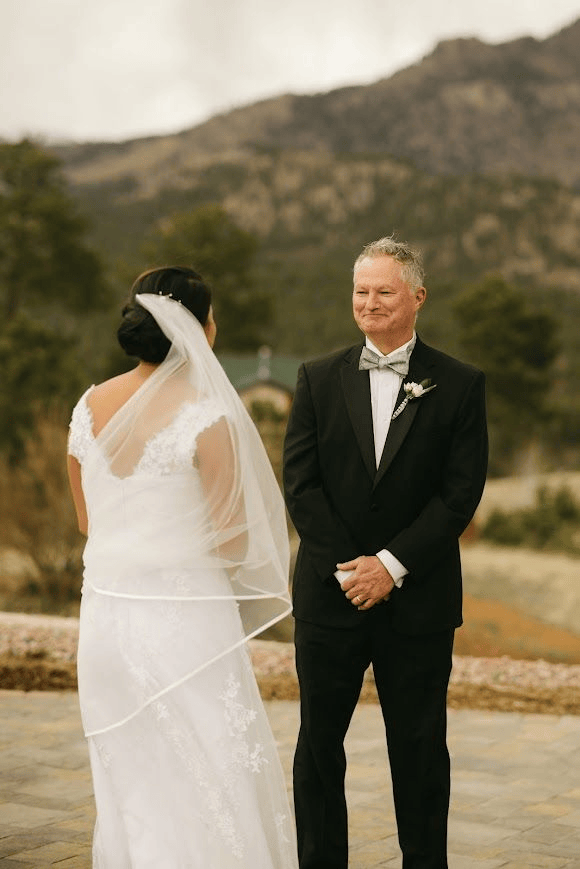
    The hardest thing was making words come out of my mouth when I turned around to see her in her wedding gown for the “first look.”

    I eventually found some words. Not sure if they were good words, since I don’t remember any of them, but I know I spoke.

    And if I can speak in that situation, I can speak up anywhere, anytime, from my heart.

  • Choose the Adventure

    Choose the Adventure

    Always choose the adventure.

    That’s a rule for me. Not that every decision has an adventure attached, but many do. When adventure is an option, choose the adventure.

    ✔️ 2001 – I chose the adventure of building a startup (CWNP) from $250. 13 years later, we were acquired by a P/E firm, and CWNP thrives today.
    ✔️ 2005 – my wife and I chose the adventure of international adoption. We traveled to and lived in Kazakhstan for 56 days, and returned with our “Crazy Kazakh Kids”, one of which, my daughter, got married last week. Keep reading!
    ✔️ 2014 – my wife chose the adventure of starting her own custom cookie business. Now she has dozens of repeat customers all over Atlanta.
    ✔️ 2018 – our yard in Roswell, GA, was covered in ankle deep English Ivy. Lots of ways to get rid of it, but we chose to adopt goats for 2 weeks.
    ✔️ 2021 – I chose the adventure of buying a local shooting range and gun store. Talk about a learning experience!!
    ✔️ 2025 – my daughter chose to have a small wedding on the side of a mountain in Woodland Park, Colorado.

    That is today’s “adventure” lesson. Always choose the adventure.

    Instead of a “normal” north Georgia wedding, we invited family and close friends for a very small wedding on a Thursday afternoon in the Colorado Rocky Mountains.

    “Normal” is a setting on the dryer.

    My wife – Mother of the Bride and daughter’s wedding coordinator – tracked EVERYTHING in Google Docs and Google Keep, down to what color table cloths would be used for the rehearsal dinner vs. the wedding reception, down to who would press “Play” on the reception music playlist, down to what was in every single box (numbered, of course) in the back of my car.

    She even made a visual time guide for the entire time guests would be there, so everyone knew exactly where they should be and when they should be there.

    We asked a fraternity brother (and friend of 40 years!) to officiate the ceremony. He and his bride traveled across the country so he could marry my baby girl, who he has known for 20 years. He was ok, until he saw my face as i walked my baby girl up the aisle and he tried to ask, “Who gives this Woman to be married to this Man?”

    We both lost it. Of course, I had already been nuked by my “first look” at my daughter, the bride-to-be. I literally could not speak.

    We packed my Sequoia like the Beverly Hillbillies full of table cloths, signage, food prep, margarita glasses, silverware, custom napkins, pre-printed wedding programs, dresses and tuxedos, and drove 27 hours there and 27 hours back to hand deliver this wedding.

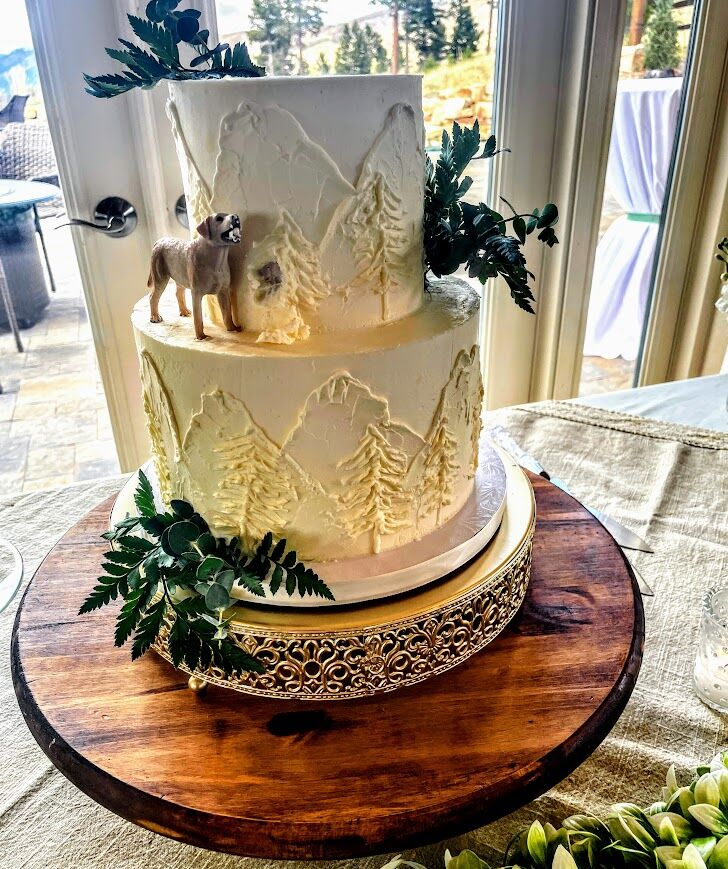
    It was an adventure from beginning to end, including my wife’s secret, ingenious idea to include our 120lb yellow lab at the reception by having him take a bite out of the cake. The look on my daughter’s face when she saw that little touch was priceless.

    Life is short. Life can be boring and monotonous as hell. When you have the opportunity, choose the adventure. You will never, ever regret it.

    Always choose the adventure.

  • I Heart Coffee

    I Heart Coffee

    I drink 30 oz of coffee every morning. That’s 2 servings from a Yeti rambler. Hot, black, and strong. My wife buys the Costco brand. It’s got an orangy-red label that I’ve never read, because I don’t care.

    I know a lot of people – my daughter comes to mind – who wouldn’t drink this coffee if they’d just been rescued from being stranded in the arctic for a week. You do you, boo. I don’t care about the brand of coffee I drink.

    Same with wine. I have a relative who has a wine cellar, within which the least expensive bottle is well over $100. My wife buys the brand in the yellow box at Target. That aforementioned relative wouldn’t even cook with this wine. That’s ok. You do you, boo.

    Same with beer. Yes, I have my go-to beer when I’m buying it (Yuengling), but if you hand me any ice cold beer, I’m gonna say thanks, clink bottles, and enjoy it, especially after 18 holes of golf.

    And I’m confident I can hit a Wal-Mart golf ball into the woods or water just as effectively as I can hit a Titleist Pro V1x. Just give me a sleeve and let’s play.

    I like my eggs scrambled with cheese, Waffle House style. My burgers with American cheese, tomatoes, and mayo. My turkey sandwiches with bacon, avocado, and mustard. My steak medium rare. My peanuts salted. Oatmeal raisin cookies, Spicy Chick-Fil-A with mayo, any kind of chocolate, Mac or PC doesn’t matter. And tap water.

    My point with all this personalized information is that I have specific preferences and requirements about certain things. The coffee is a hard requirement, but the brand doesn’t matter. But most things I just don’t get too picky about. It just doesn’t matter to me. There is drama in decisions, and freedom aside from them.

    Which means I’m just like everyone else, except for my preferences and requirements. And that’s what makes me – and you – unique.

    That’s what we look for when we are in the service business. What are their preferences, and what do they not care about? What is highly specific and meaningful, and what carries no weight at all? What are the requirements versus what will bring them joy?

    It takes time, but once you get to know your clients’, your co-workers’, your peers’, your friends’, your family’s preferences, you can deliver them, provide them, surprise them, and bring them joy with some of the little things in life.

    Or you can bring them joy by removing the drama of having to decide something they care nothing about.

    But you gotta take the time to get to know their preferences. There’s no substitute or replacement for time spent face to face with other people.

    How much coffee do you drink on the daily?

  • Sharpen Your Axe

    Sharpen Your Axe

    There’s an old tale about a tree felling contest. The two contestants were charged with chopping down a large tree, and the contest was to be won or lost based on the time it took to chop the tree down with an axe.

    The first contestant was a young man of 24 years, 6’4″, 225lbs of raw muscle. He looked upon his opponent with contempt, as the other contestant shook his hand. The 2nd contestant was a 57 year old man, who was neither daunting nor powerful looking, but old and tired looking.

    When the contest started, the young man went wild and fast, hacking away at his huge tree, and making great progress.

    The older man worked steadily and slowly, and frequently took 5-10 minute breaks.

    After more than 2 hours (these were very large oak trees), the older man hollered out “TIMBERRRRRRR!!!” and his tree feel cleanly in the exact spot he had picked out to land it.

    The younger man stood shocked, angry, surprised, and deflated. He couldn’t believe this old timer beat him, especially when he sat resting for so many breaks! How could this happen?!?

    The young man humbled himself, shook the older man’s hand and conceded victory. After congratulating him on his win, he asked the old timer, “How did you win? You took 4 breaks by my count, for at least 5 minutes each time?!?”

    The old man just smiled, and said, “Son, I wasn’t taking a break. I paused in my work to sharpen my axe. So, while I can’t swing my axe as hard or as fast as you can, my axe is sharper than yours, so my strikes on that tree cut deeper.”

    I didn’t make this story up, and I don’t know where I first heard it, but I try to go about life in the same manner as the winner of that tree felling contest.

    This week, from Sunday night through Thursday morning, I was sharpening my axe. Not resting, but sharpening.

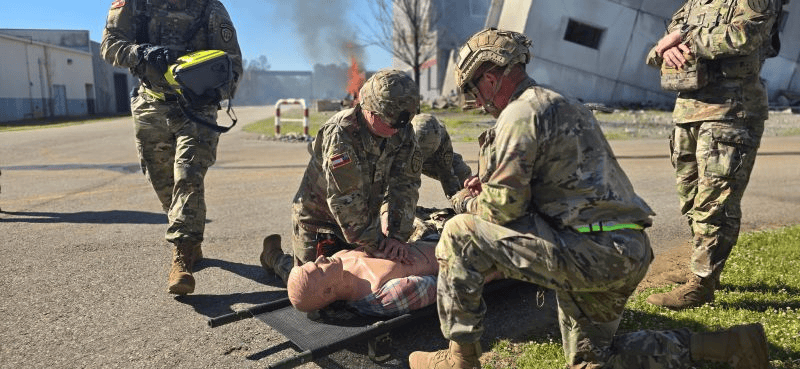
    I spent the last 4+days with 40+ other soldiers from Georgia’s state guard down in Perry Georgia at hashtag#Patriot25. We were digging deep and hard into a simulated major civil emergency: a 7.0 earthquake on the eastern seaboard.

    We conducted urban search and rescue, first aid, debris clearing, casualty evacuation, low angle extraction, low light search and rescue, high fidelity medical simulation, and emergency communications.

    After each exhausting day was over, we gathered for a cigar and energized our spirits by getting to know each other, celebrating our wins, laughing at our mistakes, assigning new nicknames, and praising those who really stood out among us.

    I am blessed to have an employer who trusts me to take such time off, and I am blessed to be a part of an organization that gets invitations to things like Patriot25.

    I am completely exhausted, WAY behind on hundreds of emails, but mentally and emotionally refreshed with new skills and confidence.

    How do you sharpen your axe?

  • What’s Your Dream?

    What’s Your Dream?

    Is “The American Dream” dead & gone? Yes or no? Why?

    I’m a hard “no.” Here’s why.

    The American Dream, in the late 1800s and throughout most of the 20th century was something like this:

    * Move to America (or be born here)
    * Grow up in a community that you remember with fondness and joyful memories
    * Graduate school (high school or maybe college)
    * Get a job
    * Work hard and save money
    * Grow your net worth
    * Achieve financial freedom to do what you want to do

    Do you agree or disagree with the points above?

    Behind all of that is economic freedom, meaning you have some degree of control over your financial destiny. Not complete control, but a high degree of control.

    I do not think any of that has gone away or disappeared.

    This morning I read a post by Mike Rowe (Dirty Jobs), in which he met a 20 year old who started at Jersey Mike’s subs when he was 16. That 20 y/o is now the GM of that Jersey Mike’s store. He will own a franchise before he’s 25.

    That’s just one anecdotal story, but that story demonstrates my point.

    The American Dream is not dead or gone; it’s been smeared.

    Somewhere along the line, “The American Dream” got associated with greed, pressure, 100 hour weeks, just scraping by, and lots of other negative connotations.

    Furthermore, there is a force in our country that is constantly telling us that America is bad: founded bad, grown up bad, done bad, does bad, is bad.

    Some of that I agree with, but I assign 99% of it to things our government has done *in the name of* America, most of which we citizens did not vote for.

    Remove all that “bad”, and what you have is a 20 year old kid working hard and creating his own dream.

    Notice there’s no mention of master’s degrees or tuition or student loans here.

    70% of ALL jobs in the U.S. do not require a college degree.

    Running a sandwich shop certainly doesn’t. That 20 y/o kid is living proof.

    We also don’t know his earnings. And that’s where things get muddled.

    My ‘American Dream’ is different from yours, and yours is different from his, and his is different from Elon Musk’s.

    In between is a whole lotta fuss over earnings and net worth.

    Dave Ramsey will be the first to tell you that anyone – ANYONE – can become a millionaire by spending less than they earn, having no debt, and saving 15% of their income.

    Doesn’t happen overnight. Nothing does. Nothing good anyway.

    What’s my American dream? What I said above: financial/economic freedom. What’s it look like? A mortgage-free home on a couple of acres, well water, solar power, chickens, goats, a vegetable garden, and lots of long walks with my wife around that property. Retirement income from my investments.

    That’s tomorrow. I have to work for it. We all do.

    But it’s still here. The American dream hasn’t gone anywhere. It’s available to anyone with patience, a willingness to work hard for a long time and live within their means.

    What’s YOUR dream?

  • LV: The Forgotten Trade

    LV: The Forgotten Trade

    We had an intro/discovery call with a prospective low voltage client today. We do these calls all the time. Every call, just like every client, is completely different.

    This one was different because the client had a plan; an LV spec document.

    Wow. That’s rare indeed. The spec called for different colored Cat6 cables for different applications. WOW!

    Exciting, isn’t it? Well, for us, it is. Very exciting. Tears of joy exciting.

    Nobody thinks about LV during the floorplan drawing stage. Nobody. Well, at least that’s how it seems from the LV side of things. We’ve had two prospects this week whose move-in date is April 1, and they’ve just reached out to us, the LV company.

    That means the main conference room probably won’t have enough speakers or mics, and they won’t be optimally placed. It means the building access control will cost more to install because the doors were purchased without the thought of wiring for access control. And, it means busting up a lot of sheetrock to install security cameras that weren’t identified prior to hanging the sheetrock.

    LV is the forgotten trade.

    MEP gets all the glory, all the plans, all the drawings, all the permits, all the up front budgets.

    LV? Not so much. It’s most often an afterthought. But it shouldn’t be.

    Low Voltage cabling controls:

    * How you get in the building
    * How you prevent people from getting in the building
    * How you make sure the right people get into the IT room
    * How you see people getting into the building
    * Your WiFi and your guests’ WiFi
    * All the LAN drops
    * Sound masking
    * Every huddle room, zoom room, teams room, and conference room’s TV, sound bar, speakers, camera, microphone and controller

    If you worked in an office – anyone’s office – today, which of these technologies did you encounter?

    I visited a partner’s office today for less than an hour, and encountered 4 of them.

    Actually 5: the room’s ceiling still had the up/down projector screen that nobody ever uses anymore because projector screens have been replaced by 85″ TV monitors.

    That’s why nobody plans for LV, the forgotten trade: when it works well, you don’t even notice it.