
Other than a specific “Image Search”, I no longer use Google to search for anything.
I use Grok.
If you’re not familiar with Grok, it’s the artificial intelligence engine produced by xAI, one of Elon Musk’s businesses. Grok is fed real time data via the “firehose” that comes out of X.
Why Grok? Why not Google?
Google provides websites, images, and what “people also ask” about the topic I just searched.
Grok provides the answer to my question. Here’s a great example.
As prep for writing this post, I searched Google for “1983 Jeep CJ-8 Scrambler” (my fav classic), and got an ad for a business that sells them, a list of what “People also asked”, a selection of images, and then the sites with the best SEO for “1983 Jeep CJ-8 Scrambler”.
Then I asked Grok, “Show me images of a 1983 Jeep CJ-8 Scrambler please?”
No, Grok can’t (yet) just give me some images pulled from the interwebz, which is odd; however, Grok gave me 6 posts on X and 15 web pages specifically about a 1983 Jeep CJ-8 Scrambler, and then proceeded to give me deep, thorough descriptions of the 1983 Jeep CJ-8 Scrambler, where I can find images of the 1983 Jeep CJ-8 Scrambler, and notes on the vehicle, including “The CJ-8 Scrambler is a long-wheelbase CJ-7 variant (103.5-inch wheelbase) with a small pickup bed, produced from 1981-1986.”
If I want locations/URLs of websites, I’d use Google.
If I want an answer to a question, I use Grok.
You still using Google?
Author: Kevin Sandlin
-

Still using Google?!?
-
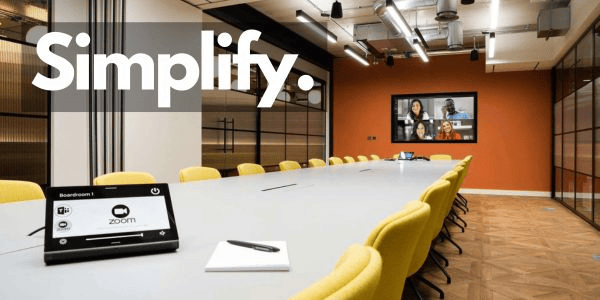
Simplify Your A/V
Your conference rooms’ A/V does not have to be complicated.
You should not have to “Call IT!!” to come fix your conference room’s A/V system. Ever.
So why do we hear over and over and over the following mantra: “Yeah, can y’all come have a look at our conference rooms? Nothing ever works. Completely unreliable.”?
Well, it’s the answer is not complicated, but the setup of these conf rooms is. It’s overly complicated.
It doesn’t have to be. Here’s why most conference room A/V systems create nothing but pain for their users.
You flew to close to the sun.
OK, I jest, but it’s true. Here’s some of the things we’ve seen in just the last 6 months of evaluating, and ripping & replacing a bunch of conf room A/V systems.
* “We can watch the SuperBowl here!” You can, but you don’t need a direct CableTV hookup through the floor core for 1 day a year.
* “We have to be able to handle any type of connection!” No, you don’t. Look to the bell curve! Capture the 80%. The edge cases are edge cases for a reason.
* “It’s gotta have an HDMI cable hookup!” No, it doesn’t. How many of your company’s new laptops have an HDMI port? How many have USB-C? USB-C is ubiquitous.
* “It’s gotta have built in surround sound!” OK boomer, your Dad’s house in 1981 had “surround sound”, but he also had a “Hi Fi Stereo System”, didn’t he? And how are all those wires and built in speakers looking now? They’re decaying. In the walls. It costs a LOT of money to permanently install speakers in your ceiling, and more to rip them out 3 years later because they don’t work.
* “A speakerphone on the table is a must.” It’s actually not, and that’s one more cable you don’t really need.
Those are the most celebrated “must haves” for conference room A/V.
The new truth is that, thanks to 2020 and covid, not only did remote work get an upgrade, but conference room A/V did, too.
Here’s what most mid-sized conference rooms need:
– 1 large TV screen/monitor (75″-85″) on the wall
– 1 Logitech Rally Bar (camera & speakers) below the screen
– 1 Logitech Tap IP controller on the table
That’s it. One (1) cable to/through your conference table.
It doesn’t have to be a Logitech. There’s Nureva, Neat, Barco, and others.
How do you decide? Are you a Microsoft shop or a Google shop? Microsoft Teams will point you in one direction. Google Meet another.
Prefer Zoom meetings? OK, Logitech has you covered.
If you’re a Microsoft shop, Teams will likely be your default, and from there, your 80% is covered. The “edge cases” can be taken care of by inviting “the conference room” to the Zoom or Google meeting.
And that’s the biggest improvement: the Conference Room is now an invitee & attendee at your meetings. Wanna have a meeting in “Room A”? Invite the room to the meeting. Inviting the room reserves the room on the calendar.
Share your screen? Create & join a Teams, Zoom, or Google meeting. Simple.
Now that we’re embracing hybrid WFH/RTO, conference rooms are used more than ever. Keep them simple. -

Learning to Rappel
More Search & Rescue (aka “SAR”) training this past weekend. This time, it was all about rappelling.
For some of you, rappelling might be your weekend go-to hobby. This was my 2nd time.
We spend the weekend in north Georgia learning all the basics of rappelling. We learned all the knots: bowline, square knot, figure 8, figure 8 follow through, figure 8 on a bight, double figure 8, prussic hitch, sheet bend, locking knot.
We learned how to tie our own rappel seat, and then prove that we knew it by heart by doing it in less than 90 seconds. When was the last time you had to physically make something that would literally hold you up? It’s quite the emotional challenge.
We learned how to belay another person, and we learned how it felt when another one of us was below, on belay, and was still learning how to do that. We all had to learn. Pain is a great teacher.
We learned how to lock-off. We cheered each other on when, one by one, we all got it.
When I joined the Georgia state guard (gasdf.us), I joined to (a) run into the danger zone when something went wrong in the state of Georgia, and (b) to show my kids the example of selfless service.
What I did not know I was getting is the best part: the camaraderie, brotherhood, friendship, and encouragement from a group of men and women I’d never met before.
Saturday night around the campsite jawboning with these fellow volunteer soldiers was peak fun. I laughed so hard I almost threw up.
I think that’s what we are all looking for when we join any organization, and specifically, when we join a new company. Simon Sinek discovered and shared that the bond created in small military units is unlike any other professional bond in the world. (https://lnkd.in/gUwrtKyd)
The challenge for all of us who are *not in a small military unit, but in the small business or corporate world, is how do we create an atmosphere that creates a similar bond?
I think the simple answer is for everyone to be present, fighting to accomplish each person’s individual goals, which all combine to meet the organization’s goals. Learn and fight together.
The picture here is me, about halfway down the rappel wall. No, I am not a Ranger. But that emblem is very cool. Makes you aspire to accomplish a tiny fraction of what Army Rangers do in a day.
We do have two retired US Army Rangers in our class. They are beyond words, but they contribute like nobody else to the entire atmosphere. Because they’ve been there and done all of that. -
Where’s Your 3rd Office?
Where do you work when you’re on the road?
Sometimes we work at home. Sometimes we work in the office. But some other times, we get to work from our “third office”!
Sounds exciting, doesn’t it? OK, maybe not “exciting”, but it could be, depending on where you go.
So, your home office has a desk, printer, one or two monitors, a docking station, your paper-related supplies, headphones, and a really comfortable chair.
And your office-office has a desk with 2 chairs on the other side of it, two monitors, a docking station, a desk phone (VoIP), your headphones from home, a decent office chair, and your printer. And probably some “files” and various papers. And people you know and work with.
But your “third office”…what do you look for? My go-to is a booth at a Chick-Fil-A. Good WiFi, good service, usually pretty quiet, and of course, great food when I get hungry.
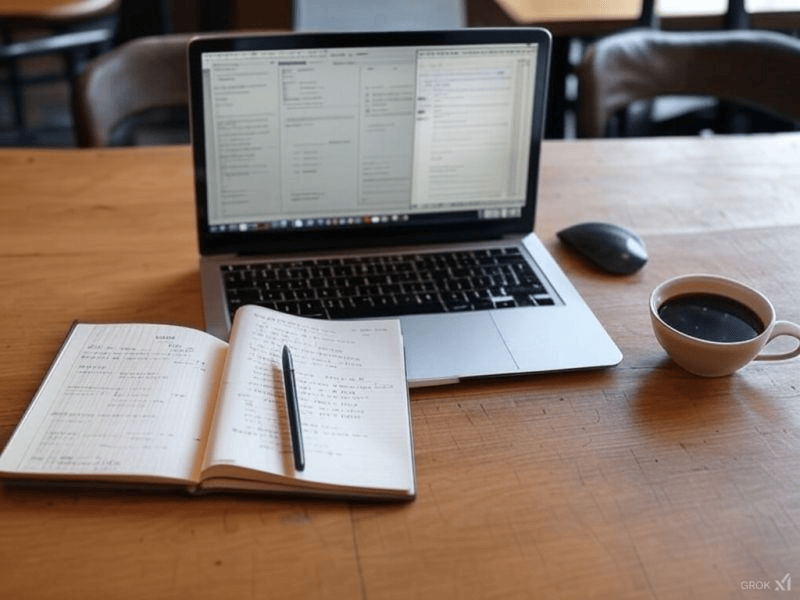
My third office has…nothing. I bring my laptop, mouse, my trusty paper notebook, and a pen. That’s it.
Think about that. What do you REALLY need to get work done? And what is your “go to” third office? -

IRL vs. Virtual
Got 47 seconds? Please watch this Gary Vaynerchuk video on Instagram:
https://lnkd.in/e7mMuk5S
What matters most in the processes deep inside your organization? Speed, efficiency, and effectiveness matter in business. Gary Vaynerchuk suggests that those things occur best in person, in the office, and tells a very familiar story to back it up.
The common story, at a high level, is that when an employee needs to speak with another employee it is quicker & easier to tap them on the shoulder and ask the question vs. trying to schedule a virtual meeting to discuss. This can lead to a disparity between in-person vs. remote when it comes to speed, efficiency, and effectiveness in business.
Do you agree? I do; however, it doesn’t *have* to lead to such disparity. The tools are there for instant communication between colleagues in any location. But are these tools being used effectively?
I once worked with a very talented person who refused to answer emails in any sort of timely manner. His defense was, “If it was so urgent, you would have just called me or walked over to my office, instead of taking the time to write an email.”
This person’s attitude annoyed everyone; however, everyone’s expectations were firmly established about how you approached him with something you needed done.
Does your organization set forth standards (aka “expectations”) for answering phone calls, text, emails, and instant messages (e.g., Slack)? That thought may not have even occurred to you. Standards for replying?
Yep. It’s a thing. Why? Expectations for productivity.
Setting expectations in any organization for any purpose is a game changer. I always tell the clients I’m working for that “I won’t know every answer, but I will get you every answer.”
That gives me the freedom to honestly say sometimes, “I don’t know.” But then I can confidently set the expectation that I will find out. Whatever it is.
Once you set expectations for communication, the focus can be on speed, efficiency, and effectiveness and how to make that happen. Not so much on where that happens. However, I think to Gary’s point it is simply easier to make it happen in person.
When was the last time you put off answering a detailed or otherwise annoying email?
Now, when was the last time someone knocked on your office door and you completely ignored them? 😱 -

ATL CRE 2025
Earlier this week, CBRE announced the complete (CBRE already owned 40%) purchase of Industrious, bringing to light the new business segment within CRE known as “Building Operations & Experience (BOE)”. See Patrick Braswell‘s analysis here:
https://lnkd.in/evCBPMBM
At the end of 2024, just a couple of weeks ago, the following stats were published by Commercial Edge (link: https://lnkd.in/e-MFUJjz)
* Six out of the 25 top U.S. office markets have seen their vacancy rates increase by more than 500 basis points in the last year, with Austin leading with a 650-basis-point surge
* During 2024, 39.7 million square feet of office space was delivered, while only 9.1 million square feet broke ground
* Office properties have sold at an average of $179 per square foot, down 9% from the 2023 average sale price
* The average U.S. office listing rate stood at $32.85 per square foot, up 3.7% year-over-year
* After a slow start this year, Manhattan is once again the most sought-after market for office investment, logging $3.8 billion in transactions
Also, commercial mortgage rates ranged from 5.34% to 7.27% depending on the type of loan and lender.
What’s are the trends here, now that we’re into 2025 and about to inaugurate a new administration in Washington?
Here’s what I see as a relative newcomer to this space:
* Lots of empty office space means good deals on subleases and long term leases
* WFH as a top line “perk” for employees means employers can lease less space than they would have needed 5 years ago for the same number of employees
* Building technology has improved dramatically in the last 5 years, the very least of which is the near ubiquitous availability of fiber, and the most used of which is video conferencing technology, which is near Jetsons-like.
* CBRE has kicked down the door of Co-Working & Shared Office Space being a separate entity from CRE management companies. It’s now part of the mix.
* To level the playing field between WFH and RTO, building managers – not just their leased employers – are upping the game to make “the office” someplace you actually want to spend time.
* More CRE was delivered than started (broke ground) means more space on the market now but less on the way.
What’s all this mean? Movement. Activity. Opportunity. All of which is good for the marketplace and providers within the marketplace. -
“Full RTO!”
So, now that we’re 2 weeks in to 2025, who has returned to the office full time? Amazon? Anyone? Beuller?
We (TRANSCEND LV) visited a very cool space today, in which the IT staff is preparing for “full RTO”. They’re updating conference rooms from old tech to new, updating WiFi access points, and otherwise preparing for hundreds of employees to return to working from the office.
They’ve done happy hours, regular office get-togethers, RTO bonuses, and totally upgrading the “office experience”.
But nobody is RTO-ing. Ruh roh, Raggy.
Why do you think that is? Why, other than “I don’t want to”, are employees resistant to RTO?
I’ve read a lot about WFH vs. RTO, and one thing that hasn’t been talked about much, if at all, is this:
They moved.
Yeah, they moved. The employees saw WFH as an upgrade for their own lifestyle and as a cost cutting and employee attraction/retention tool for employers.
They bet that WFH was not going away. Ever.
And they moved.
To the beach. To the mountains. To the country. To a farm. To someplace they always wanted to live. To a much lower cost of living destination.
You name it. They moved.
They’re not going to RTO not so much because they don’t want to (they don’t), but more so because it’s now a 17-hour commute.
With that in mind, we’re kind of getting close to a crossroads, where the rubber will meet the road for mandatory RTO employers and employees who have enough value to tell those RTO employers to kick rocks.
Who wins? Well, I say everyone does. The free market in this scenario means WFH people can look literally all over the world for employment, with several years of WFH production to bank on.
And RTO employers can refresh their view of the local workforce, while making “special exemptions” for those REALLY key employees that will WFH forevermore.
Do you know anyone who moved when WFH became really cool?
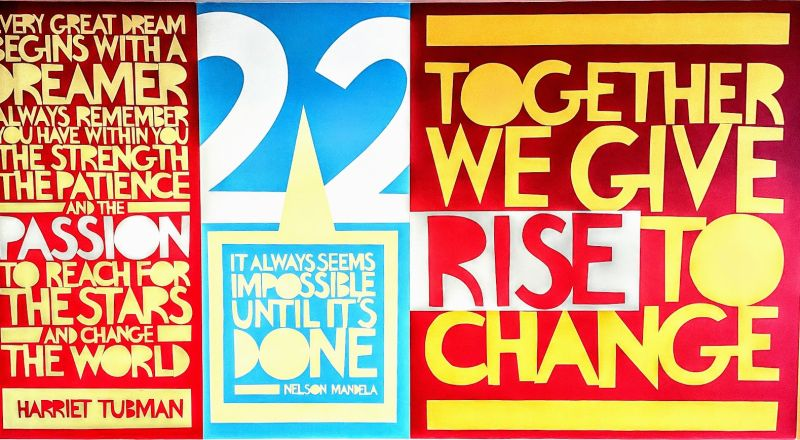
Unrelated: I think this wall mural is cool. It’s in an office. Not at your home. -
What’s Your Home Office Setup?
OK, now that Atlanta has recovered from our (first?) snow of the 2025 Winter, let’s talk home office setup.
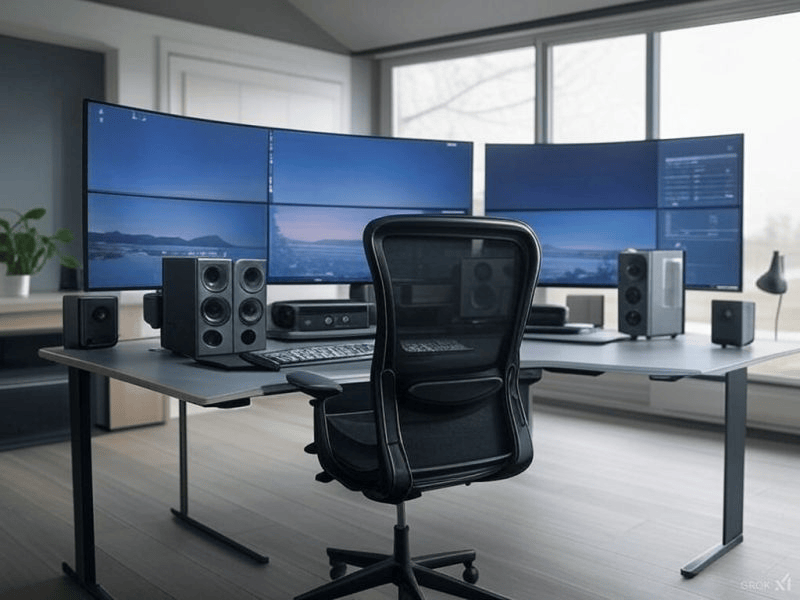
Full disclosure: my home office setup consists of the following items.
* Windows laptop
* Bluetooth mouse
* Levenger Stanley Journal
* Sharpie S-Gel pen
* WiFi via Amazon Eero / AT&T internet
I do my very best to print nothing, and maintain everything digitally in Google Drive. I do pay $10/mo for extra storage.
That’s it. No frills. Simply setup for a simply guy.
What’s yours?
And, bigger question, what is your IN OFFICE setup? Are they different or same same? What adjustments do you have to make to move between home & office? Which do you like better, home or office?
Finally, what’s your home internet speed vs. that of your office? -
No Snow Days
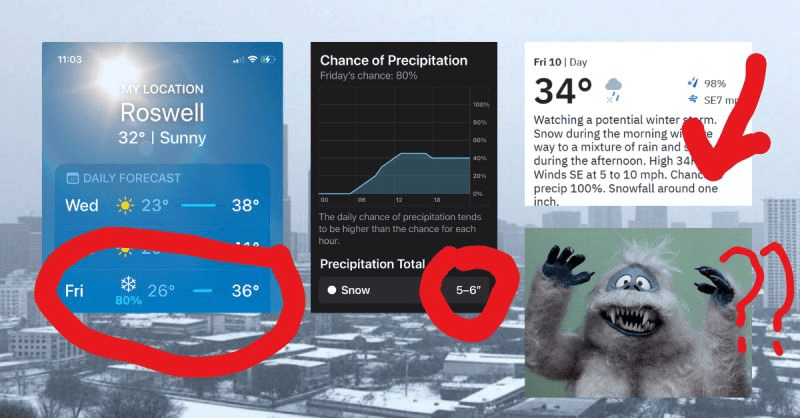
It’s gonna snow in Atlanta on Friday.
Currently, my weather app says 5-6″ of snow from Friday at noon through Saturday morning at about 6AM.
We’ll see. I always keep my expectations low, so I don’t get disappointed by just a few flurries.
I. Want. Snow!
Which brings me to the real point: WFH is awesome in “inclement” weather. My daughter and I are workmates for a few months until she gets married and moves to NC.
When we started seeing the weather reports saying it *might* snow, she got all excited, but then remembered that she’s got a “big girl job”.
No “snow days”. Gotta go to work.
But she works from home. I’m based at home, but like to get out and visit customer sites. She literally works 100% from home. No snow days.
But that’s one of the very best features of the hybrid workplace. If you think it’s gonna be another snowmageddon in Atlanta, you plan to WFH.
Because you can.
Because your workforce and processes are setup to be done from anywhere, even Atlanta in the snow. And if it doesn’t snow like I want it to, then nothing really changed, except you worked from home on Friday.
The office will still be there on Monday, when the snow will be long gone, and so will you.
Let the debate over WFH, RTO, or Hybrid rage on.
Then implement whatever works best for your business, tweaking as needed, and making sure the tech your employees have at the office is even better than their environment at home. -
What’s the Best Professional Advice You’ve Ever Received?

What is the single best piece of professional career advice you have ever received? Here’s mine.
Long long ago in a galaxy far far away (Atlanta, 1994), I was working for a startup now known as A.D.A.M. Health. My boss was Cary Chandler. I was fresh out of MBA school, and knew exactly nothing about anything.
My sister-in-law invited Angel and I to attend a Christian conference down at the old Atlanta Omni.
I mentioned 1994, right? OK.
This conference was 6pm-10pm Monday through Friday and then 10am-6pm on Saturday. We attended with 10,000 of our closest friends. And my sister-in-law.
I did NOT want to go, and I don’t remember much, though I took good notes, but I remember this one piece of advice that Bill Gothard hammered home to those of us who were beginning our careers:
Your only job is to make your boss successful.
That was it. Sounds…not so profound, right? Well, when you consider this 26 y/o idiot MBA whose frontal cortex had only recently come online, it was profound.
See, I thought I was supposed to work to make ME successful.
No. Make your boss successful. Not you, but your boss. Make your boss successful. That’s your job.
Not happy. Not confident. Not flattered. Not proud. Not arrogant.
Successful.
From that point forward, that’s the only thing that drove me. I did everything I could to make Cary successful, and when he left for greener pastures, I worked to make my new boss successful. And when I left for a better opportunity, I had a new boss to make successful.
Why? Because, If your boss is successful…
1. Your boss will get promoted, making opportunity for you.
2. Your boss will trust you with more responsibility and opportunity
3. Your boss will trust you to tell them the truth, even when it’s bad news
4. The company will be successful
5. You will be successful, but you won’t be focused on self
Now, “make your boss successful” does not mean blowing sunshine up their skirt or delivering only the good news. I had to have several very hard conversations with my bosses along the way. Easy? No. Necessary for their success? YES.
“Make your boss successful” doesn’t improve your skills or abilities.
It changes your attitude. Focusing on someone else’s success forces you to focus not on yourself but on them; helping them, encouraging them, telling them the truth, and accepting truths they lay on you.
What’s the best piece of professional advice you’ve ever received?
