Become a Digital Marketing Warrior Using the OODA Loop

The OODA loop was created as part of a military strategy developed by USAF Colonel John Boyd. Col. Boyd proposed that agility in any military situation involving humans would defeat raw power if the fighters continually used the OODA loop. We can do the same in our digital marketing efforts.

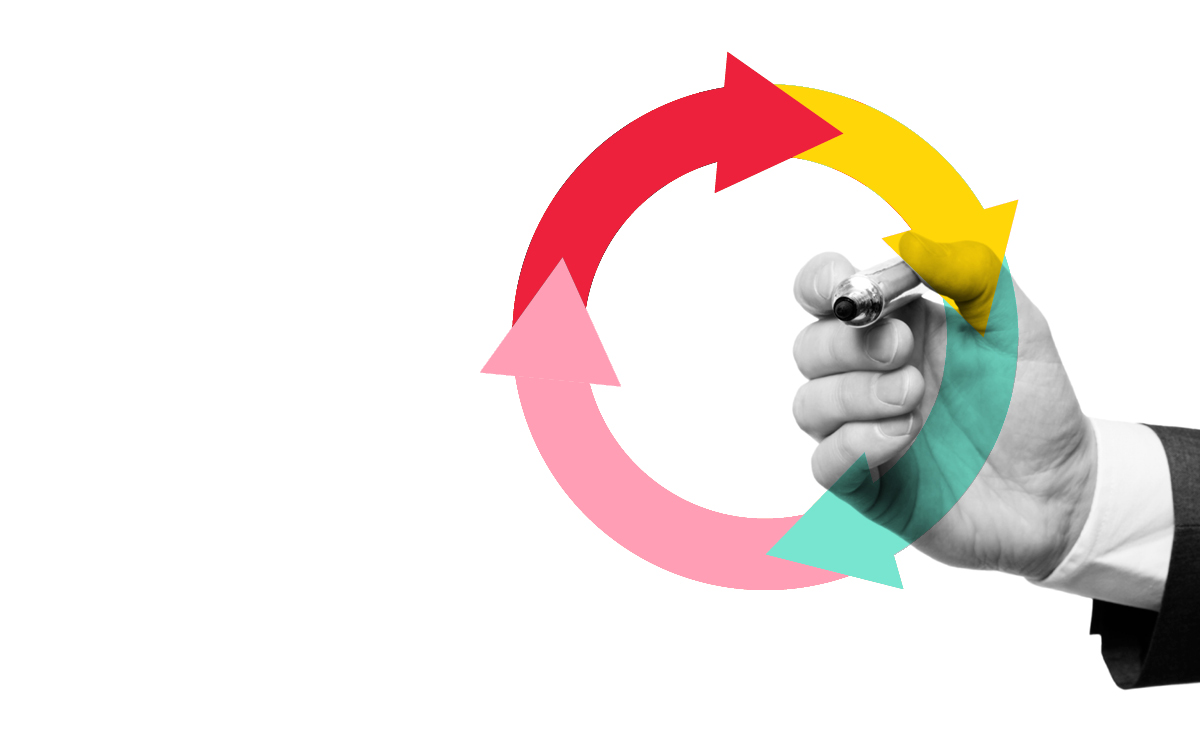
But first, what’s the OODA loop? OODA stands for Observe – Orient – Decide – Act. “Boyd developed the concept to explain how to direct one’s energies to defeat an adversary and survive. Boyd emphasized that “the loop” is actually a set of interacting loops that are to be kept in continuous operation during combat.
The OODA loop applies to digital marketing because we are able to constantly experiment and get quick, accurate results using the digital analytics tools that we all have at our disposal. Here’s a simple walk-through of how one can create and implement the OODA loop into digital marketing efforts.
1. Observe: what are your current assets in content, channels, reach; where are your customers; what types of content are they consuming; how are they acquiring products/services?
2. Orient: how do your assets and abilities match up to the needs and location of your prospect/customer base?
3. Decide: create an experiment with a definition of success and a clear measurement.
4. Act: Conduct the experiment for a short time interval.
Then you go back to the start. The OODA loop is a never-ending cycle of experimentation and optimization.
Here’s a simplified example of how we use the OODA loop to learn.
1. Observe: You have a video of your CMO delivering a presentation at an industry conference.
2. Orient: She knocked the speech out of the park, but there were only 175 attendees at the conference, and your market audience is tens of thousands of C-Suite executives.
3. Decide: You could easily share this video on YouTube, and promote the video in your next blog post and email newsletter.
4. Act: You post the video on YouTube, and write a short blog post, which will also be used as text in the next newsletter.
Now you begin again.
1. Observe: Your audience loves the video, and the video gets more than 1000 views on Youtube; however, many people comment that there are some sections of the video that are not clear and that the audio was not perfect in a couple of spots.
2. Orient: It’s about $1 per minute to get audio and video transcribed using a service like Speechpad, so getting the transcript of your CMO’s speech would be less than $20.
3. Decide: Get the video transcribed, and turn the text into a series of blog posts.
4. Act: Create a campaign based on your CMO’s speech, featuring the video supported by the corresponding blog posts.
Remember, the OODA loop is a loop, meaning it never stops, and is repeated often. The beauty of digital marketing is the speed at which we can conduct experiments until we discover tactics that work really well and tactics that we should avoid. Having a construct like the OODA loop helps you work through those experiments in rapid succession.

Comments

Leave a comment

More from Kevin

  • More Speaking & Teaching In May

    We had so much fun last Saturday offering the Digital Marketing Bootcamp at General Assembly that we’re going to do it again in June! It really was a great class, thanks to the 14 future digital marketers who attended and shared their visions for what they want to do in digital. We’ll be offering that…

  • The [DGM] Breakfast Club

    No, this was not us this morning, but I did spend an entire Saturday with 14 future digital marketers at General Assembly. The genesis of this offering was the 10-week Digital Marketing class that I led from Jan – Mar of this year. In the final session before Demo Night, we did a complete review…

  • Buffer, Kabbage, and Suster agree: blog.

    I preach every day that every company should blog, especially startups and small businesses with limited marketing budgets. Pushing your content out via your blog is the starting point for your entire digital marketing strategy, which encompasses your content marketing strategy. Blogging requires only your time, and your organized thoughts put to keystrokes that tell…

  • Got Presentations? Create Blog Content.

    The average American reads approximately 300 words per minute. The average time that a speaker talks per slide of a presentation (one with slides, of course) is at least 30 seconds, and, depending upon the complexity of the content, up to three minutes per slide.  For the purpose of this blog post, let’s assume it’s…

  • 1-Day Digital Marketing Bootcamp @ GA

    Next Saturday, May 2, we will be hosting a 1-Day Digital Marketing Bootcamp at General Assembly in Ponce City Market from 10am to 4pm. After leading the 10-week part time Digital Marketing class this winter, we decided that a one-day, fast moving but hands on primer would be valuable to those who either (a) need…

  • The Interview

    When I’m not creating content (aka writing), I’m getting content from those who know it best: entrepreneurs. That’s the heart of the routine as your content creator & strategist. I ask you an open ended question, you tell me your entire story, which then becomes blog fodder for your content marketing calendar. If only it…

  • Two TED Talks That Tempered My Tongue

    When I started Pitch Practice in June of 2013, I didn’t know what it would eventually be or what value it might have to others. It was simply a fun gathering of fellow entrepreneurs to help each other answer the question, “So, what do you do?” a little better, and also help us prepare for…

  • Four Upcoming Speaking Events @ GA Atlanta

    My speaking & teaching calendar for April and May just got a little busier, thanks to the great folks at General Assembly. If you haven’t visited their sweet new space at Ponce City Market, you should do yourself a favor and head to midtown Atlanta and have a look. While you’re there, you can get…

  • Time

    Building on one of the most important aspects of our Digital Marketing Demo Night on Thursday, I need to emphasize the importance of time, mainly how fast it passes, both in the macro and micro. In the macro, guess what? It’s spring. How’d that happen? We get busy. We plan each week in minute detail,…